
How to Improve Your Mountain Biking
Mountain biking is an exciting sport with a... Read Article
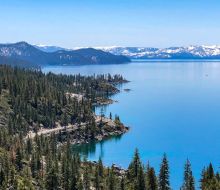
The Tahoe-Truckee region is effortlessly picturesque on its own. The towering pines, snow-capped peaks and sparkling crystal-clear blue waters that rival tropical destinations really don't take much effort to capture. However, there are always ways to level up your photography and really capture the essence of the landscape and energy.
Photo: A sunny afternoon above Lake Tahoe, shot midday to capture the vibrant blues of the lake.
Whether you’re filming on an iPhone, DSLR or flying a drone, there are endless opportunities in the Tahoe-Truckee region to capture your experience and inspire others to visit and protect the lands we love so much. While I am a huge fan of using professional gear, I know that it really comes down to sharing perspective and passion. It comes down to capturing real, raw moments that speak to the human spirit and sense of awe and adventure that we often crave in this digital world. It’s about the adventure, hiking to the best spot to capture the first hint of sunshine on the summits, or staying out by the lake just a little longer to shoot the golden reflections on the water as the sun sets below the Sierra. It’s about getting excited for the little things again and being able to have lasting memories to share for a lifetime.
Below, I have curated five tips to help you capture your vision, elevate your photography and inspire excitement to explore in a new way. Enjoy!
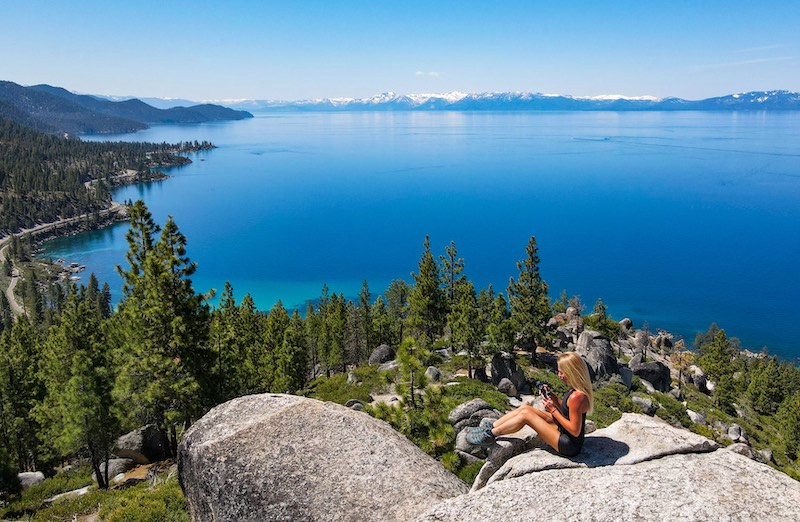
I always recommend location scouting before your shoot. It's a great way to explore!
I’m a huge fan of spontaneous adventures, but it’s also important to have a general plan of action, especially if you want to get specific shots at multiple locations in a day. It’s important to start with the basics, such as filming locations, how long it will take to get there and what times of the day offer the optimal lighting. I always recommend leaving early so you have plenty of time to explore the area, adjust settings and potentially find new angles, compositions and subject matter.
Typically, if I have a pretty full filming day, I will location scout and storyboard beforehand so I can be familiar with my schedule, locations and priority shots. This helps me not only plan my day, but also visualize my shots. Location and light have a huge impact, and it’s important to take advantage of my time at each spot.
For example, the sun rises from the east and casts a beautiful golden light on the western-facing peaks early in the morning. To avoid my subjects being too backlit, or washed out by a harsh midday sun, I often suggest we go to locations such as Sand Harbor, East Shore Trail, Cave Rock or Nevada Beach for golden hour morning shoots. Typically, mornings also come with calm, glassy waters, and I can plan for landscape or lifestyle activity shots more easily knowing this.
I then try to find nearby spots to film so I can dedicate my time to that particular region and not have to stress about traffic or other variables that might get in the way of my storyboard. This allows for the shoot to be more relaxed, carefree and creative. The more fun people are having, the more natural and authentic the photos tend to be.
Mapping out nearby points of interest is also a great way to explore the region’s top attractions and hidden gems and create backup spots in case the original locations don’t work out. Some days, nothing goes to plan, and it’s important to embrace the art of pivoting. Photography goes hand in hand with storytelling, and no interesting story would be complete without some mishaps!
Now that you have an idea of locations, plan accordingly for your time there. Make sure to have adequate amounts of water, food, fuel in the tank, SPF, outfit changes, batteries and space on your SD cards. I always bring backup SD cards and portable chargers just to be prepared.
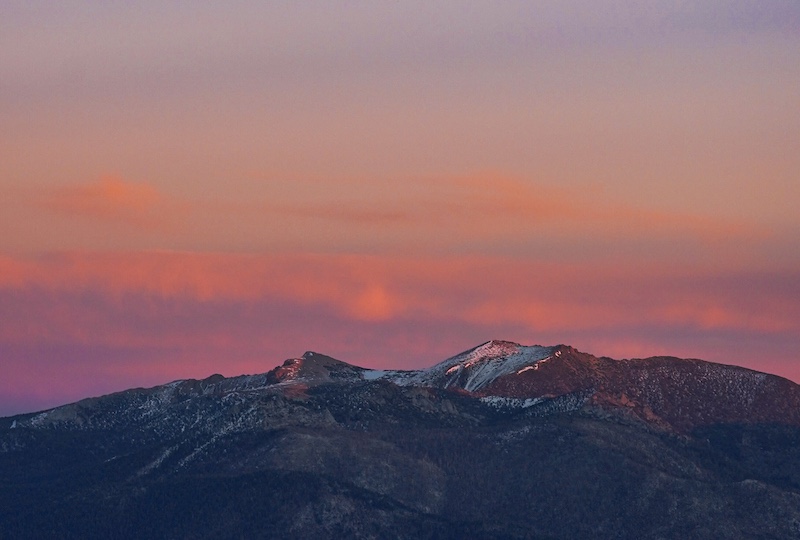
Understanding light will help you create dynamic shots, especially at sunrise or sunset.
Lighting is everything in photography. Understanding how to work with it, and manipulate it, will completely transform your photography and overall process.
In the Tahoe-Truckee region, light is constantly shifting. Golden hour creates soft pastel hues with an illuminating golden glow, and midday light allows for the vibrant blues and greens to take center stage. Cloudy days cast moody scenes and offer a completely different method of filming, often a race against time before rain and wind make it more challenging. Blue hour and night scenes offer a chance for long exposure, which requires a lot of patience and skill.
Each time of day offers a chance to capture a different mood, story and scene. I always recommend working with all of them to experiment with different settings and see the region in unique ways.
Although I love to shoot during golden hour, midday sun is a great way to capture the signature shades of blue. However, that often comes with the challenges of harsh shadows cast from the sun being directly above the subject. Learning how to work with that, whether it's by intentionally positioning the subjects in an ideal spot, utilizing flash and diffusion, or post-processing editing, can make all the difference and create a stunning image that you’re proud of. Learning how to work in midday can add a lot of value to your skillset and open up more time in the day that you can dedicate to clients who want the vibrant color palette and summery aesthetic.
Understanding that lighting isn’t something you control but manipulate will change the way you approach photography.
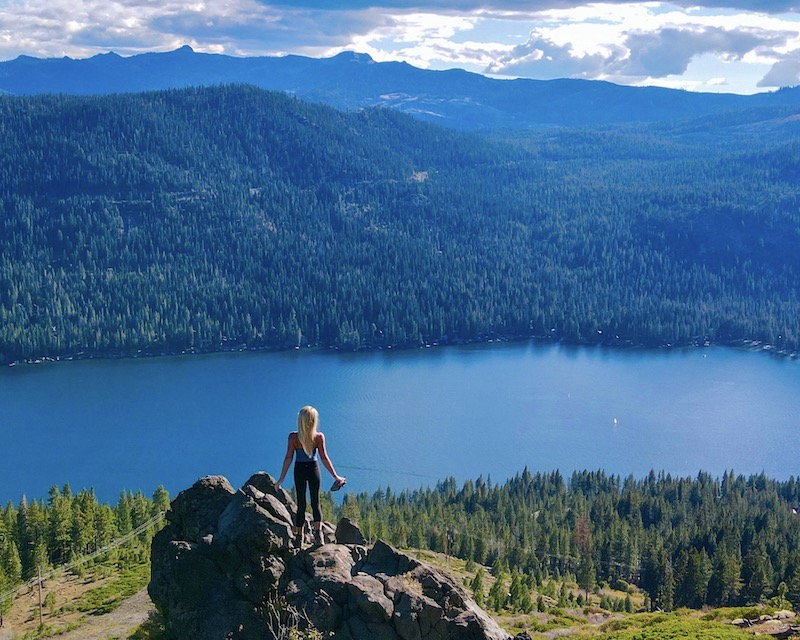
Self-portrait working with the rule of thirds, framing the subject in the lake and leading lines.
I believe the Tahoe-Truckee region is stunning at every angle, but understanding how composition works will take your photos to an entirely new level.
Basically, composition is the art of arranging the elements of the landscape and subjects into your frame. It’s how you create emotion, stories and depth and guide the viewer’s eye through the image.
First, understand how to initially break up the image into the foreground, middle ground and background. Understand what your subjects are, and how you want to share their story. Are you focusing on the subjects themselves and want to make them the highlight of the scene? Or do you want to shoot wide and integrate them with a larger landscape? How you shoot changes the scene and story.
Use the art of framing to your advantage. Do you want your subject to stick out on its own, or be framed by trees, mountains, the lake or rocks? Where you put the subject is key. Try to move your subject in different poses to create a variety of scenes. The energy between a still subject and one in motion is drastic. Try playing with different movements and interactions with the scenery.
Try different vantage points, such as low shots or shooting from higher up. While you do this, work with leading lines. If you’re having a hard time, you can always come back to the rule of thirds, a helpful tool that basically splits your composition into 3x3 grids. Here, you can work with placing your subject along the intersection points, rather than at the center. I always advise getting creative and experimenting with all sorts of compositions. The best photography never stays inside the lines! Work with mood, feeling and freedom of expression.
If you’re working with human subjects, I always advise bringing multiple outfits to set the tone. For example, a red jacket against a blue landscape will automatically stand out on its own, as opposed to a more neutral outfit that blends in.
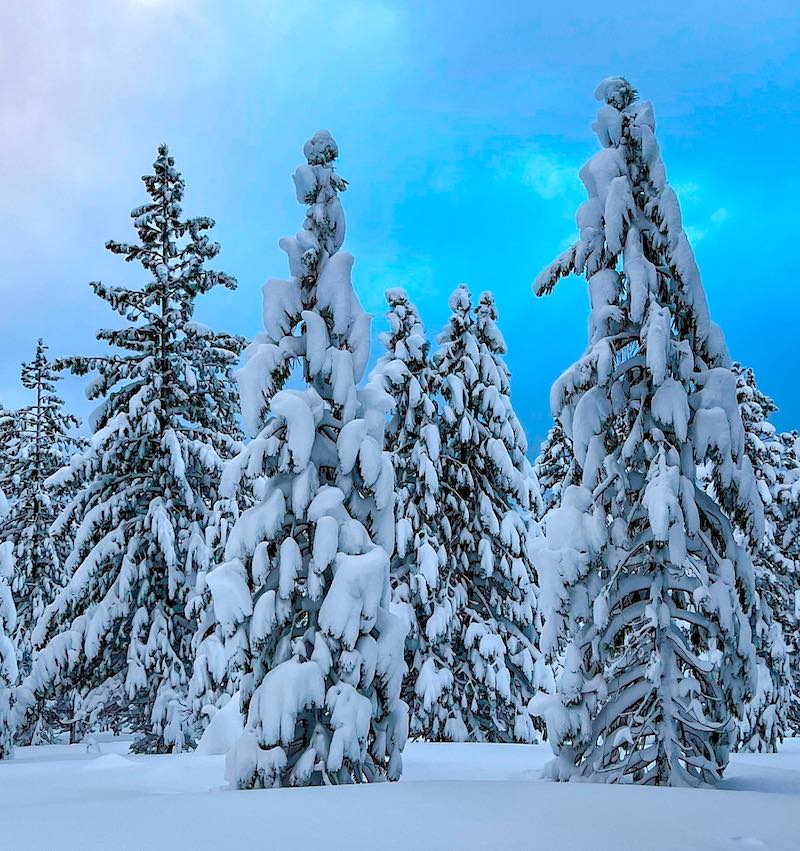
Some places require a lot of movement. I had to cross-country ski in to get this shot!
Staying in one place will just give you a lot of photos of the same scene. It’s important to move around and experiment with different angles and scenes from various vantage points, and it’s a good way to explore the area!
That said, be as intentional as you can during each location. Don’t be in such a hurry to get to the next one that you lose focus of where you are or rush your photos. You want to ensure that each photo is in focus and that the compositions reflect your intentions.
While you move to different locations, move at different vantage points. Maybe film a scene behind rocks or get up to a high vantage point (this is where drones come in handy). Sometimes, certain spots are only accessible by a long hike, getting on the water via a paddleboard or kayak, or by ski touring. This can be an adventure in itself! Remember to work with the landscape, and don’t get so caught up in the image you think you should get. Rather, focus on what you have in front of you. This is a great concept to apply to everyday life, too.
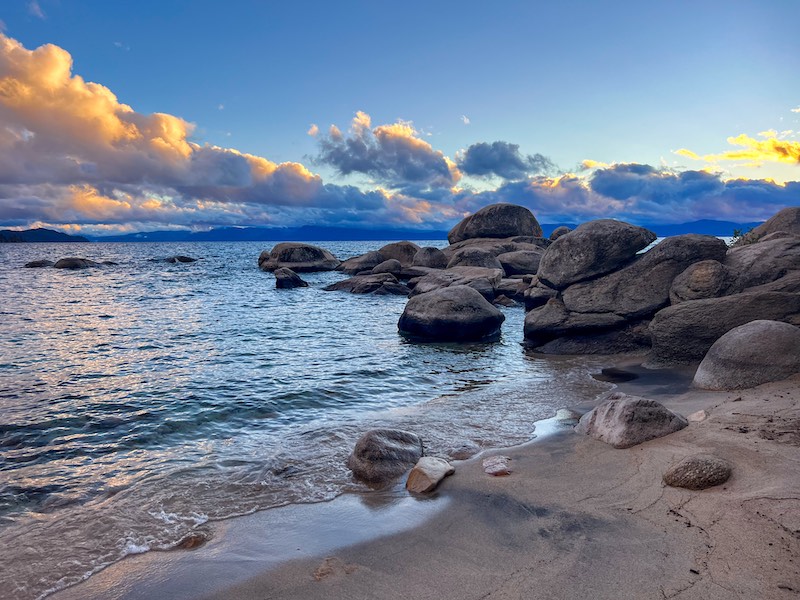
This photo was taken on an iPhone, but the story behind it is special. Having fun matters!
I know I say this in almost every blog, but having fun is the most important part of the process. Don’t let your passion die because you get so caught up in comparison or getting the “perfect shots.”
Learning to lean into the experience and journey, and pivoting your mindset when filming days are less than ideal, make all the difference. Your approach is everything. And, you can see it in your work. People are drawn to real, raw captures that evoke the entire human experience.
It’s easy to get caught up in getting the best shots or having the best gear, but ultimately it comes down to sharing your experience and learning to use what you have. Treat the journey as a lifelong learning experience. Always remember why you started and continue to embrace what brings you joy from it. Never stop exploring, meeting new people in the community and sharing your story. That’s what the world needs!
All photos taken by Kirsten Alexis
 Kirsten is an outdoor adventure enthusiast, writer and photographer. You can typically find her hiking, paddleboarding, cross-country skiing and checking out new spots to share in the Tahoe Donner region. She has been lucky to call Tahoe her second home since she was a child and aims to inspire people to experience Tahoe and fall in love with the beauty and adventurous spirit of the region through her blogs and content.


Truckee Roundhouse • Truckee
Sunday, June 6th 11:00 am - 5:00 pm
View All Events!
 Get GREAT deals on a huge variety of vape products for a limited time!
Call (775) 580-6110 or stop in for details.
Get GREAT deals on a huge variety of vape products for a limited time!
Call (775) 580-6110 or stop in for details.


