Waking up in the Tahoe-Truckee region after a big snow storm is truly spectacular. The mountains and pine trees are blanketed in a fresh coat of snow. The golden morning light warms the crisp air. The chairlifts begin turning, skiers and snowboarders make their way toward the line, and the energy shifts to that of excitement for the day ahead. And beneath your skis lies freshly groomed corduroy.
The ski resort experience may appear effortless to the average skier, but behind the scenes there’s hard work and dedication that prove otherwise.
Long before the first chair loads, a team of people have been awake, working tirelessly to ensure everything runs smoothly on the slopes.
While most of the Tahoe-Truckee region is asleep, snowcats meticulously groom the runs. Snowmakers monitor temperatures and create fresh layers of snow. Ski patrol teams monitor conditions, terrain and potential hazards. Lift operation crews inspect the chairlifts and gondolas, making sure they run safely and seamlessly throughout the day.
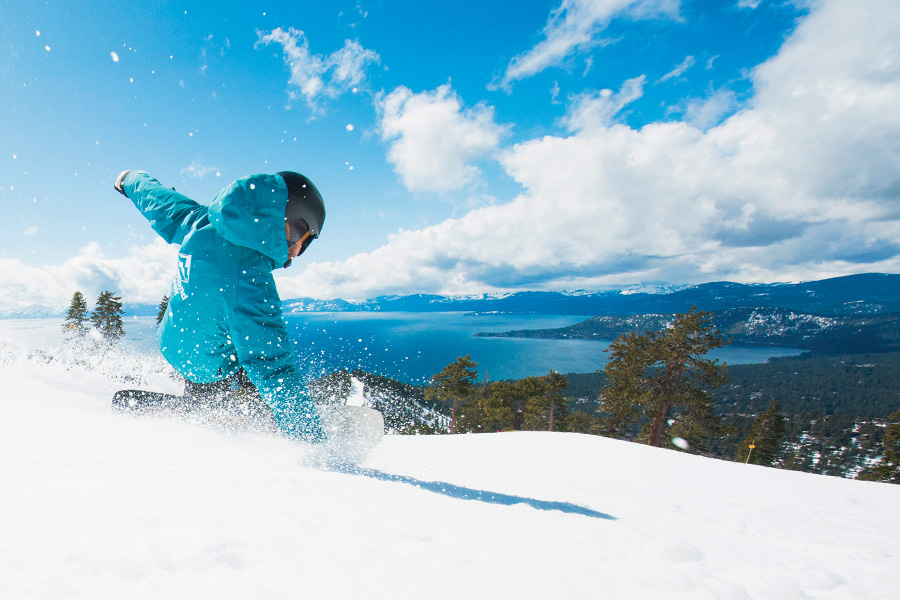
Photo: Kai McMurty, Diamond Peak Ski Resort
Snowmakers and Groomers: Preparing the Mountain After Hours
For skiers and snowboarders, the day ends with the last run of the day. For groomers, snowmakers and mountain operations, that’s when the shift typically begins, assuming the conditions are right for the job.
At Diamond Peak (Tahoe’s first ski resort to implement snowmaking systems), the grooming, snowmaking and operations teams are passionate about their jobs and work tirelessly between closing and opening hours to ensure safe and fun conditions for all patrons.
Paul Raymore, Diamond Peak’s marketing director, shares that “winters in Lake Tahoe are a constantly changing environment full of surprises, so there’s really never an ‘average’ day in the life of Diamond Peak. One of the many things most ski resort employees love about their jobs is that few days are ever really the same.”
One thing that does stay constant is a coordinated effort among teams to ensure that the mountain is safe for skiers by the early morning hours. The shifts often begin with the snowmaking team, who typically start blowing snow as soon as the resort is fully closed to the public and all potential hazards have been assessed and taken care of.
“The snowmakers are some of the hardiest of Diamond Peak’s employees, as they are generally working late at night in freezing temperatures and sometimes stormy conditions,” Raymore says. “Diamond Peak utilizes a variety of snowmaking guns, from high-pressure air and water guns to high-efficiency TechnoAlpin fan guns, and these are constantly being monitored and adjusted to improve snowmaking efficiency and moved around the mountain to supplement the natural snowpack where needed.”
Once the snow is ready, the Snow Maintenance Team, also known as the groomers, are on-site and ready to start their shift, creating the beloved fresh corduroy sought after by skiers across the region.
Billy Biggers, assistant slope maintenance manager at Diamond Peak, shares that it takes a lot of passion, patience and dedication to be a groomer.
“Nothing about grooming is easy,” Biggers says. “The hours, the working conditions and the OCD that comes out in everyone while working in them are real challenges. They are complex machines with a lot of variables, so anything can come your way.”
Despite the grueling conditions, late hours and intense labor, the groomers truly love their career and craft because their hard work makes a positive impact on the skiers and community at large.
“Putting a smile on people’s faces as they enjoy your hard work is something a lot of other professions don’t get to witness,” Biggers says, emphasizing why grooming is such an in-demand position at the resort and why they keep returning each season.
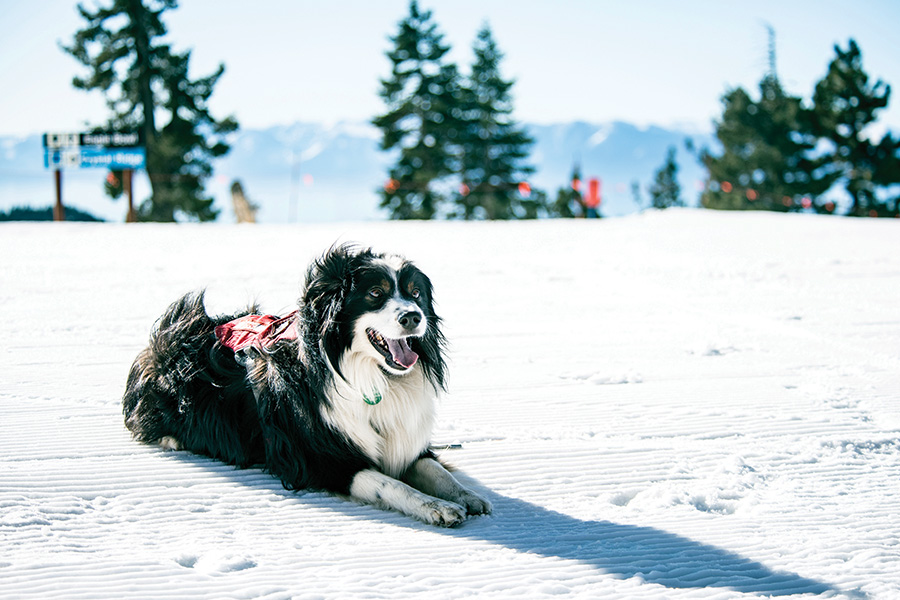
Photo: Jake Pollock, Diamond Peak Ski Resort
Ski Patrol: The Resort’s First Line of Emergency Response
Behind every safe and successful day on the slopes is a team of passionate and dedicated professionals whose job is to keep the mountain and skiers safe. Ski Patrol works tirelessly to respond quickly and efficiently to rescue injured skiers, manage potential mountain hazards, mitigate avalanche risk and help skiers navigate safely through challenging terrain and emergencies.
Their work begins before the slopes open to the general public, as they assess snow conditions and hazards that might need to be mitigated before skiers can safely ski down their favorite runs. Ski Patrol also has to be prepared to tend to an injured skier at all times of the day. Although a rescue may look like a moment of chaos, the consistent training and work behind the scenes create a seamless response for arrival, injury stabilization and rescue to the base of the mountain.
Earlier this year, I was involved in a skiing accident at Palisades. Within seconds, my whole life changed. As I lay there in shock, looking up at the clouds clearing from the sky, waiting for ski patrol, I felt a combination of fear and peace, chaos and calm. I knew my ACL was ruptured. I knew I was going to have a long road ahead of me, both mentally and physically. I also knew I couldn’t get down the mountain safely on my own and needed the expertise and guidance of Ski Patrol to get me down, get stable and get on my way to recovery.
Two members of Palisades Ski Patrol located me, guided me through the knee stabilization, placed me on a sled and brought me to the hut with professionalism, compassion and humor. In times of stress, sadness and uncertainty, having a sense of humanity and humor is important. Looking back, I can see why the Palisades Ski Patrol is regarded as one of the best in the region.
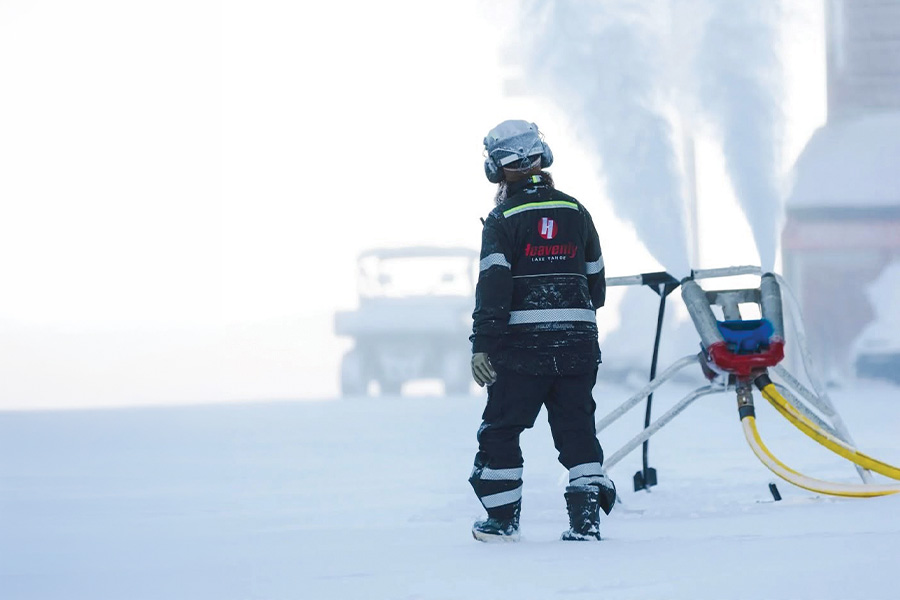
Photo: Heavenly Mountain Resort
In the South Lake region, Kirkwood Mountain Resort has an extremely renowned and skilled Ski Patrol team, trained in outdoor medical rescue procedures, avalanche awareness and mitigation, terrain navigation, toboggan handling, mental resiliency and some in accident investigation and avalanche dog training.
Training is a huge component of the job and continues through out the entire season.
“New hires participate in an intensive new hire training program, typically beginning shortly after opening and lasting approximately two weeks,” shares Katie Wry, Kirkwood’s Ski Patrol director. “Each new patroller has a sign-off sheet covering the skills and responsibilities they must demonstrate before operating independently. Once a patroller is signed off, training shifts toward continuing education and progressively higher expectations.”
Throughout each shift, Ski Patrol members are placed around the resort, including in the patrol stations ready to go at any given incident.
“The rest of the team maintains a presence throughout the mountain, responding to guest calls, assisting with injuries, providing guest service, checking terrain conditions, maintaining markings and communicating relevant findings to station supervisors,” Wry says. “Throughout the day, we may also focus on specific training objectives, events or operational needs. At the end of the day, we receive our sweep assignments and divide the mountain among the team so that every run is checked and cleared before closing.”
When it is snowing, Ski Patrol is constantly monitoring varying conditions and weather reports, stocking supplies, preparing and responding to incidents and communicating with other members regarding avalanche mitigation and potential hazards. No day here is “typical,” Ski Patrol members say, and that’s what makes the job so exciting and rewarding.
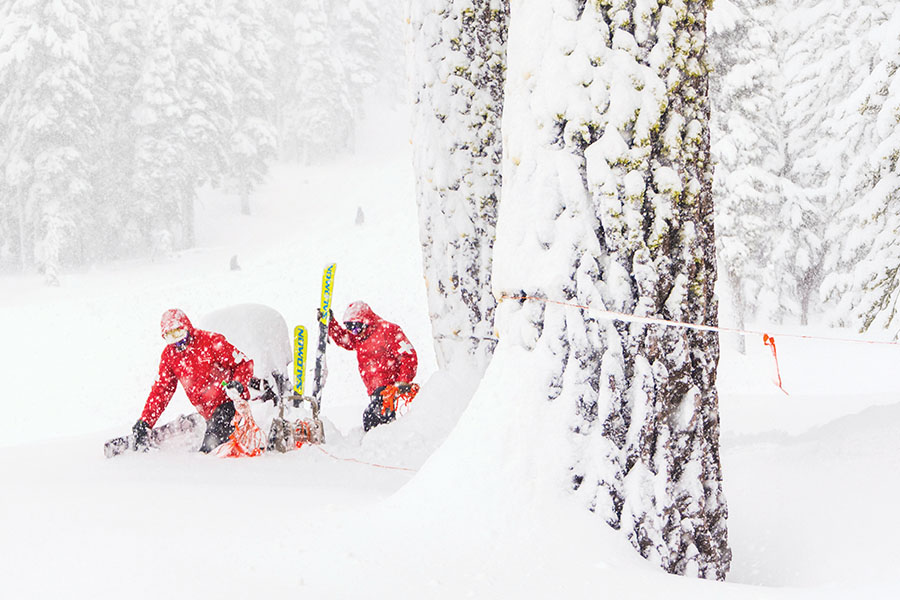
Photo: Northstar California Resort / Katey Hamill
Avalanche Dogs: Assisting Search and Rescue
Avalanche mitigation and rescue are a dynamic aspect of Ski Patrol. When disaster strikes every second matters, and it is crucial that Ski Patrol members are highly educated, trained and ready to be activated at a moment’s notice.
Ski Patrol members hold a deep understanding of the power of nature and are knowledgeable about ever-changing conditions, varied terrain, hazard identification, snowpack, forecasting and mitigation practices throughout the resort. On top of this, they are constantly training for potential future rescues, ready to go at a moment’s notice for rapid response, search and rescue, patient assessment and stabilization and skilled evacuation procedures, many of which hold inherent risks to themselves.
Some of these heroes have four legs.
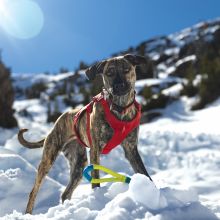
Kirkwood Mountain Resort’s avalanche dogs are highly trained and adorable members of the team, working alongside their handlers to help in search and rescue missions. These fearless dogs, utilizing their incredibly strong sense of smell, help dig through deep snow to locate missing skiers.
“Kirkwood currently has six avalanche dogs at varying levels of certification and training,” says Wry. “Training an avalanche dog is a demanding process that requires significant commitment from both the dog and the handler. We have a variety of breeds, each with different strengths and abilities.”
Most of the Ski Patrol members help with avalanche dog training, but “the individual owner is primarily responsible for obedience training and ensuring that their dog is prepared for certification,” Wry continues.
Kirkwood has Level 1 and Level 2 certifications for their dogs. A committee will review the new dogs who enter the program and address questions regarding their training progress, readiness and certification timeline.
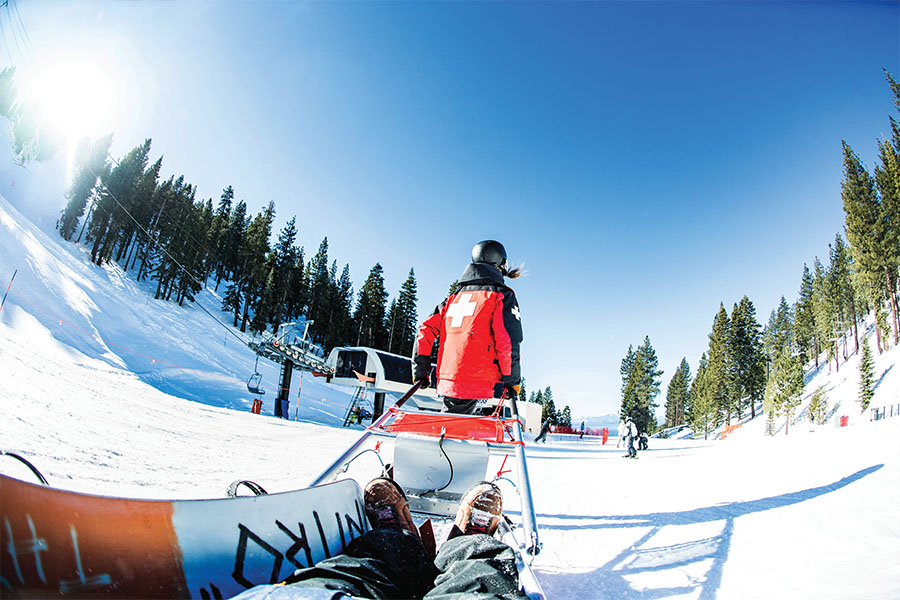
Photo: Jake Pollock, Diamond Peak Ski Resort
SKI RESORT SAFETY TIPS
Staying safe on the slopes starts with you.
“Knowing your responsibility code is every rider’s responsibility,” says Dennis Baggett, communications manager at Northstar California Resort. “Knowing the conditions on the day you are riding is important and having the right gear can make your experience safer and more enjoy able. If you are unsure, don’t be afraid to ask.”
Be familiar with the resort’s safety rules, terrain maps and ski patrol.
Before you ski, make sure you have researched the ski resort’s safety rules and terrain maps and that you know the ski patrol’s number just in case of an emergency. This way, you can confidently tell them where you are so they can locate you quickly and effortlessly.
Stay in control and ride at your level.
Staying in control keeps you and other riders safe. Collisions make up a huge percentage of accidents and injuries on the slopes. I’m a fan of challenging yourself and having fun, but it’s important to ride on appropriate slopes. Beginners should stick to the greens and practice the fundamentals. Intermediates can challenge themselves on varied blues. Only take on the black diamonds when you’re comfortable with more challenging terrain.
Yield the right of way
Always be aware of your surroundings and understand that you are responsible for the skiers below you. Pay attention to those to your sides and above you. If you notice that anyone above you is being reckless, slow down to let them pass.
Get a coach or take a skills course
Ski lessons aren’t just for first-timers! Getting a coach will help you improve your skills, gain confidence and become more familiar with the resort’s terrain. I’ve been skiing for a long time, and I still take lessons because I see so much value in having a professional help me improve. Group lessons and clinics are a great way to meet friends at the same level on the mountain.
Wear proper equipment and layers
Wearing a helmet is non-negotiable as it can significantly decrease head trauma should a collision occur. Wearing proper layers is important too: moisture-wicking base layers, water and wind-resistant outer layers, proper gloves and goggles. Don’t forget sunscreen.
Take breaks
Avoid fatigue, dehydration and the effects of harsh weather by taking breaks. Drink water (preferably with electrolytes) or hot tea and fuel up with a hearty meal or nutrient-dense snacks.
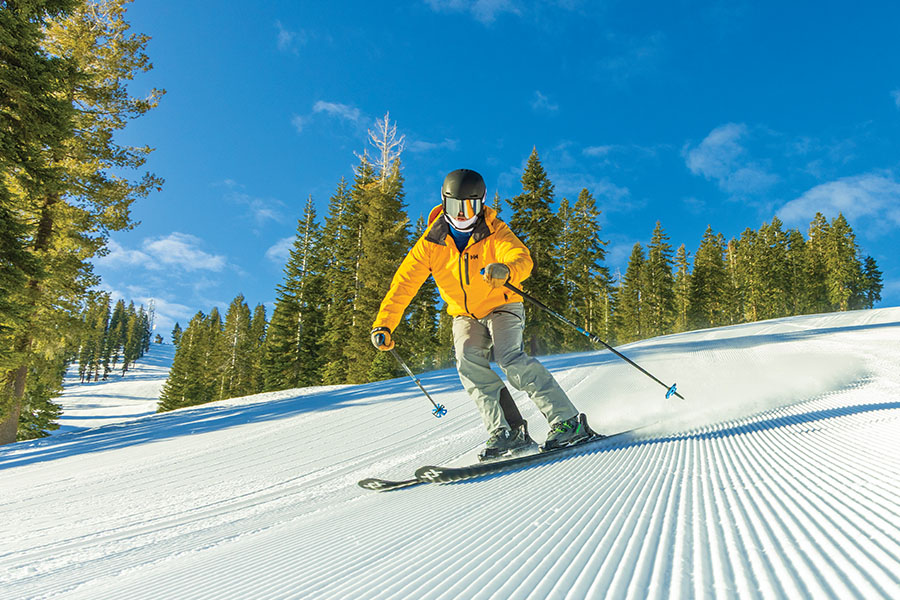
Photo: Northstar California Resorts / Katey Hamil
About the Author Kirsten Alexis
 Kirsten is an outdoor adventure enthusiast, writer and photographer. You can typically find her hiking, paddleboarding, cross-country skiing and checking out new spots to share in the Tahoe Donner region. She has been lucky to call Tahoe her second home since she was a child and aims to inspire people to experience Tahoe and fall in love with the beauty and adventurous spirit of the region through her blogs and content.